Shang-Chi COMICS RETROSPECTIVE: Marvel cashed in on a craze in 1973 with a Master of Kung Fu
With Shang-Chi about to become part of the Marvel Cinematic Universe (MCU) with his own movie Shang-Chi and the Legend of the Ten Rings (Sept. 3), I thought it would be interesting to look back on the very different, original incarnation of Shang-Chi.
ORIGINS & OVERVIEW
Wanting to capitalize on the kung fu craze of the early 1970s, and after being unable to license the popular Kung Fu tv series (featuring lead character Kwai Chang Caine), Marvel Comics created the similarly-named Shang-Chi (shahng-chee). They inserted him into British pulp crime novelist Sax Rohmer’s Fu Manchu universe, to which they had just licensed the character rights.
Between 1912 and 1959, Rohmer wrote 13 extremely popular novels feeding on the irrational, real-life fear of the “Yellow Peril,” represented in his stories by fictional criminal mastermind (and the original Dr. Evil!), Dr. Fu Manchu. In those novels, Fu Manchu had groomed his daughter to succeed him. Perhaps this is what inspired Marvel to make Shang-Chi the son of Fu Manchu, a father who trained him to adulthood to be the ultimate living weapon at this command, and to succeed him one day.
While re-reading my well-loved spinner copies, when one early foe took one look at Shang and judged him to be a “half-breed,” it reminded me of something I had long forgotten: Shang is half-Chinese. Fu Manchu had recruited and seduced the most beautiful and brilliant woman in the world (a Brit) to be the mother of his "genetically superior" heir. To Shang's British compatriots, he was a "Chinaman," and to his fellow Chinese, he was considered a "half-breed Britisher." Shang never seemed to feel at home in either world. Perhaps this was inspired by the similar struggles of the half-human, half-Vulcan Mr. Spock on Star Trek, running every weekday in syndication at the time.
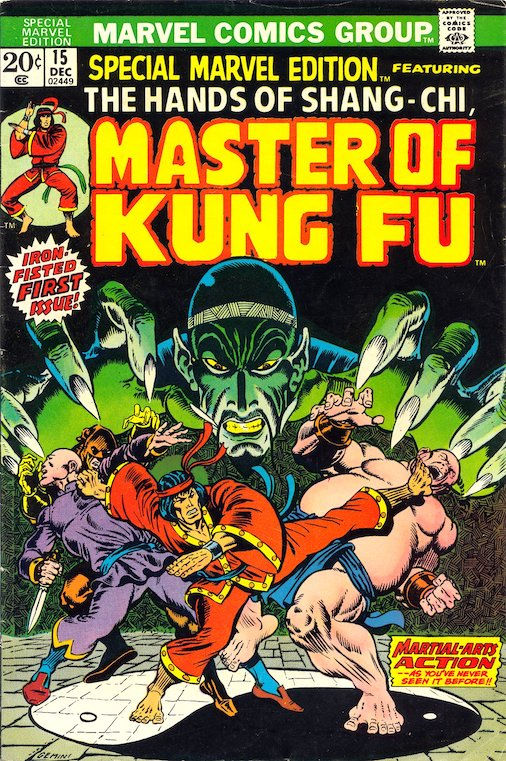
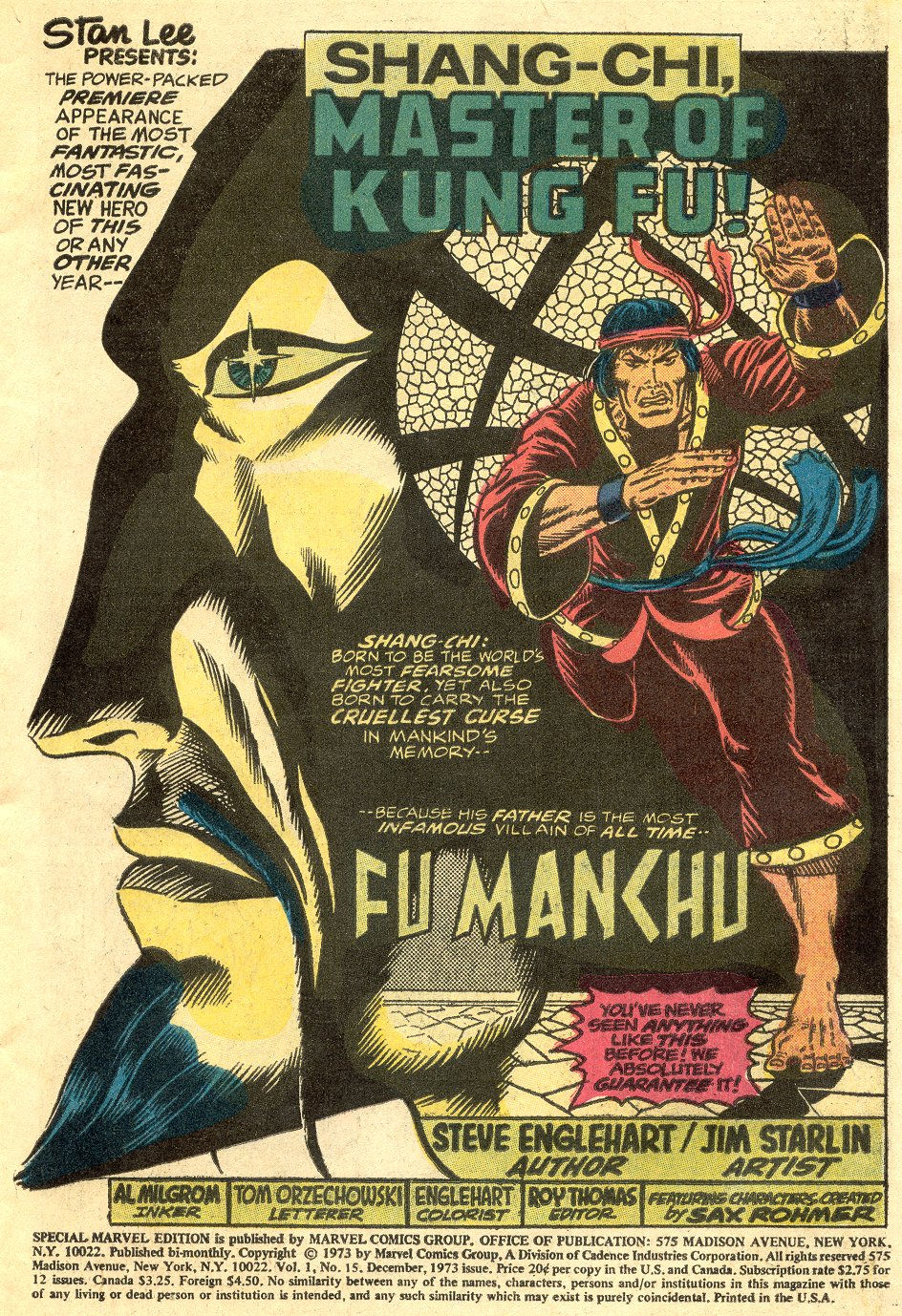
Shang-Chi’s first appearance was in Special Marvel Edition #15 (1973), another of Marvel’s various “try-out” titles, which featured a different character for a few issues to gauge reader interest, before determining if they deserved their own book. Shang-Chi was so immediately popular that as of issue #17, SME was renamed The Hands of Shang-Chi, Master of Kung Fu. Today it is more briefly referred to as Master of Kung Fu (MOKF).
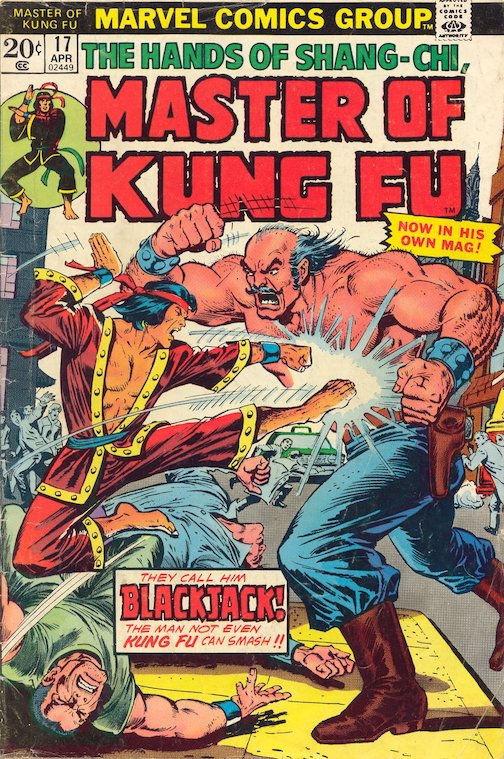
Volume one of MOKF lasted 125 issues, plus Giant-Size editions and annuals, and regular appearances in the black-and-white magazine The Deadly Hands of Kung Fu. With a few exceptions, every issue of MOKF was illustrated by a now-legendary artist at or approaching the peak of their creative skills, starting with Jim Starlin and Paul Gulacy. They were followed with admirable, lengthy runs by Mike Zeck —who quickly developed as an artist and soon became one of Marvel’s star pencillers— and Gene Day.
Unfortunately, in the mid-1970s there was still a lot of racial stereotyping of Asian characters, and Shang-Chi felt the sting of racism from some of his Caucasian British allies, one who refused to use his name, instead calling him “Chinaman” for the duration of the title’s run. Those allies were Rohmer characters with colorful British names like Black Jack Tarr, Sir Denis Nayland Smith, and Clive Reston. Even the coloring of Chinese characters, including “half-breed” Shang-Chi, is overdone in a saturated yellow-gold. Inexplicably, even in stories alongside full-blooded Chinese characters, Shang is still colored the same tone, or even darker. However, no artists exaggerated their depictions of Chinese facial features, except for the occasionally devilish-looking Fu Manchu. And even though some artists were guilty of drawing Shang with "karate chop hands" way too often (cough, JimStarlin, cough), most made an effort to accurately portray kung fu. Overall, it was obvious that writers and artists expressed admiration in their verbal and visual portrayals for Chinese traditions, culture, and design motifs.
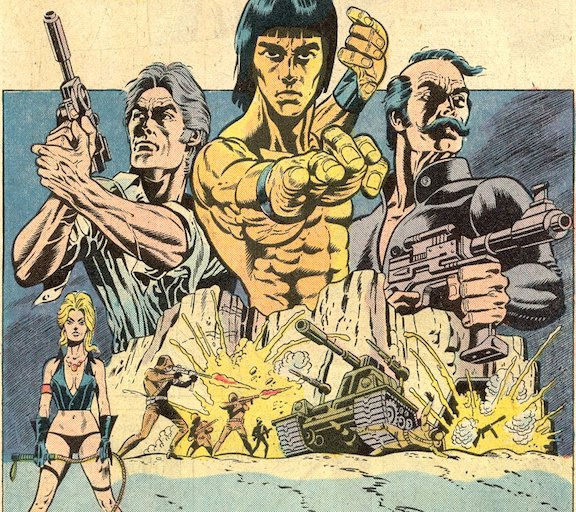
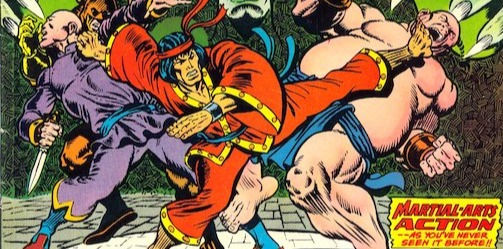
The basic focus of MOKF was Sir Nayland Smith’s fight against Fu Manchu, and Fu's mission to reshape the world for the better in his own vision, which basically meant eliminating anyone who opposed him, and ruling the globe. Fu Manchu assembled teams of fighters from around the world, providing a constant stream of attacks against Smith’s team, including sometimes reluctant team-member Shang-Chi. Fu Manchu raised Shang-Chi to be undefeatable, and this was proven again and again with breathtaking action sequences that scratched the martial arts itch of readers. Though a normal man with no superhuman abilities, Shang was able to impressively break through heavy wooden doors, steel swords, and manacles with his hands and feet, through his sheer mastery of kung fu.
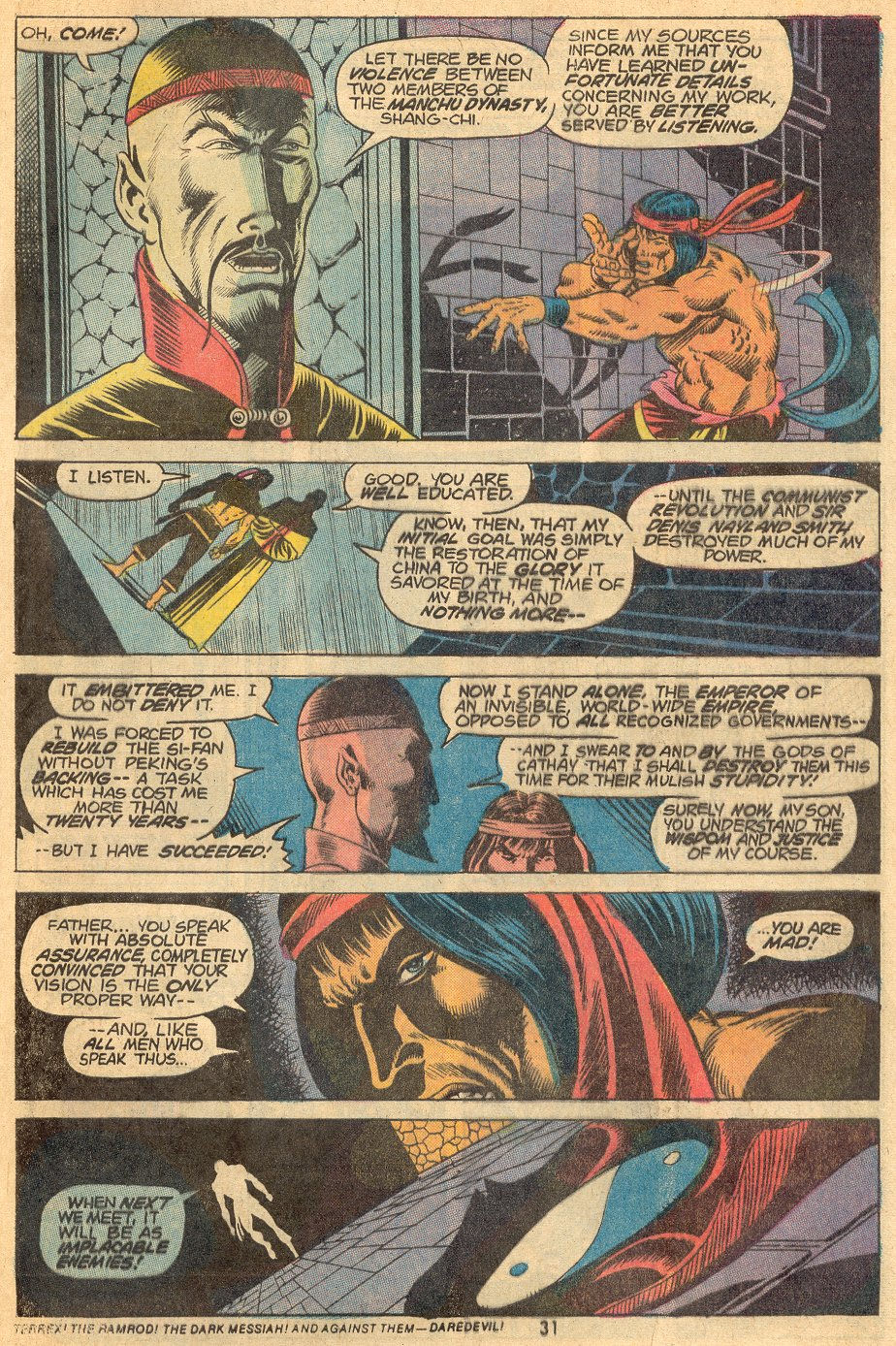
The ENGELHART-Starlin Era (Special Marvel Edition #15-16, MOKF #17-24)
Writer Steve Englehart and Artist Jim Starlin created and designed Shang-Chi, whose name supposedly translated to “The Rising and Advancing of a Spirit.” Shang-Chi sported a garish, bright red fighting gi with gold trim and a Yin/Yang symbol on the back, metal wristbands, a headband, and like his Kung Fu tv inspiration, he rarely wore shoes. His British black ops colleagues often chided him for the impracticality of his heavy “pajamas,” and Shang seemed to agree, as he shed his tunic and went bare-chested on missions more times than not.
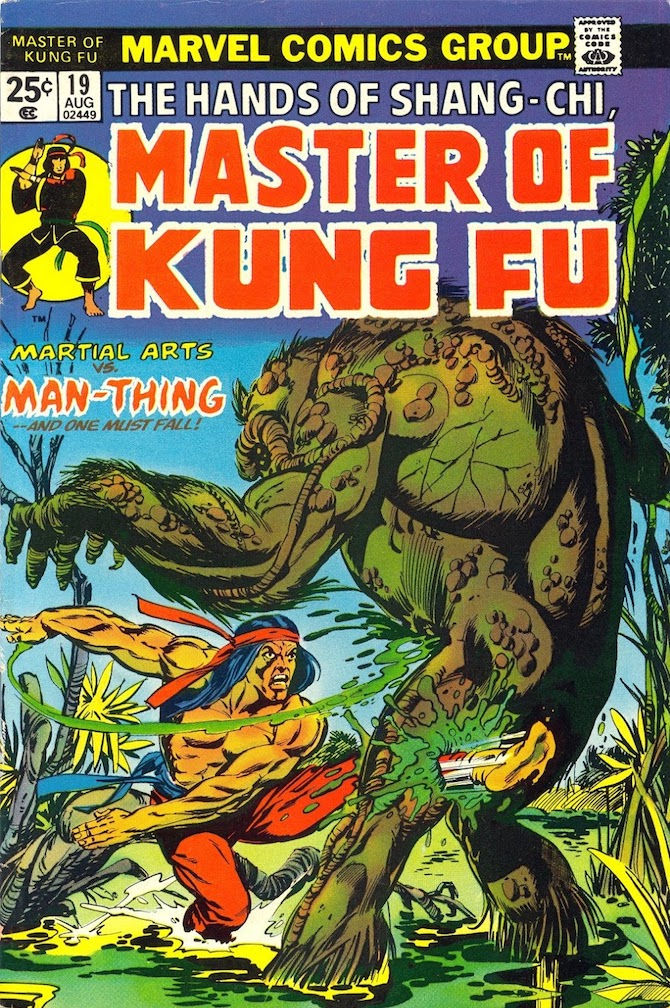
Starlin could choreograph and illustrate an exciting fight scene with the best comic artists, and while he crafted passable martial art battles, the next penciller would prove to be a master of kung fu artistry.
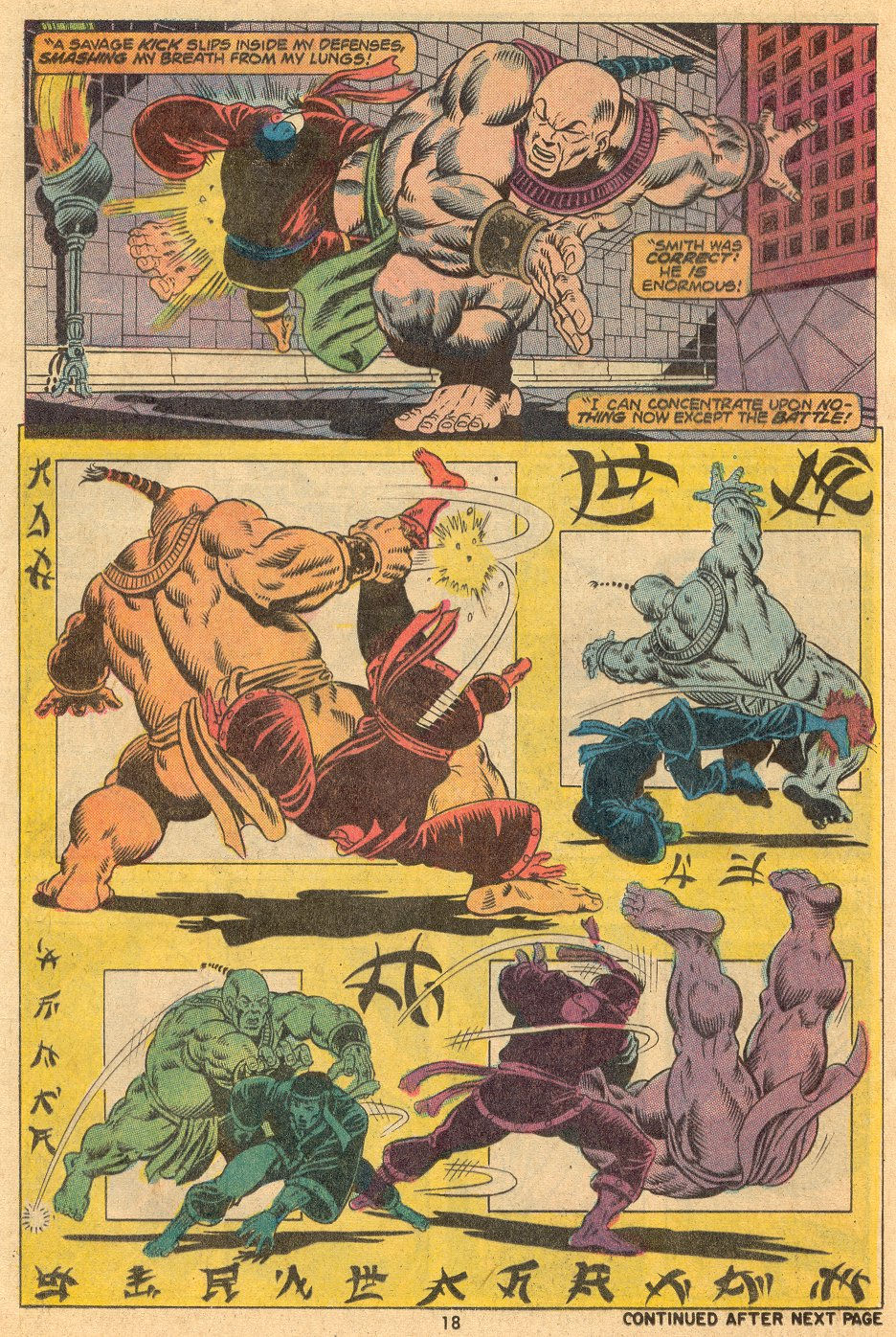
The ENGELHART-MOENCH-GULACY Era (MOKF #25, 29-31, 33-35, 38-40, 42-50, Giant-Size MOKF #1-3)
The Moench/Gulacy stories created missions for Smith’s covert ops teams that often read and looked like James Bond movies, with an endless array of elaborate enemy bases to infiltrate, evil plans to foil, colorful henchmen and assassins to defeat, and a master villain in Fu Manchu who always cheated death, endlessly extending his life with the mysterious elixir vitae.
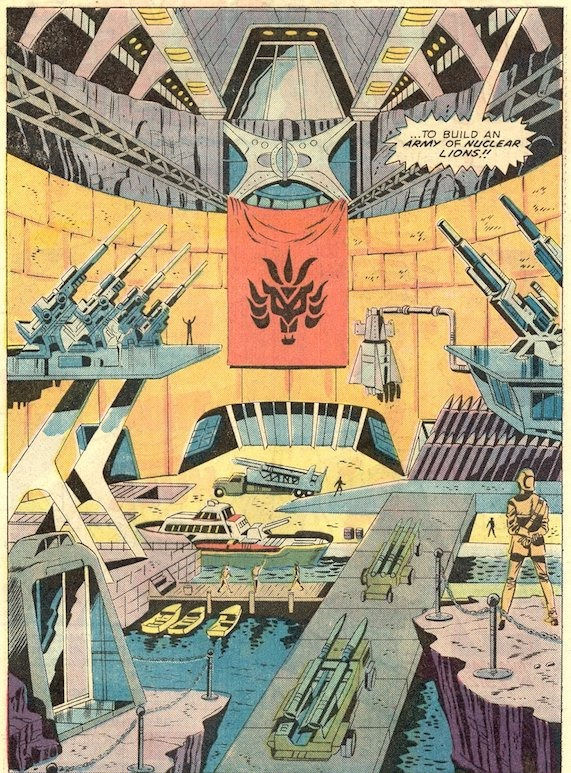
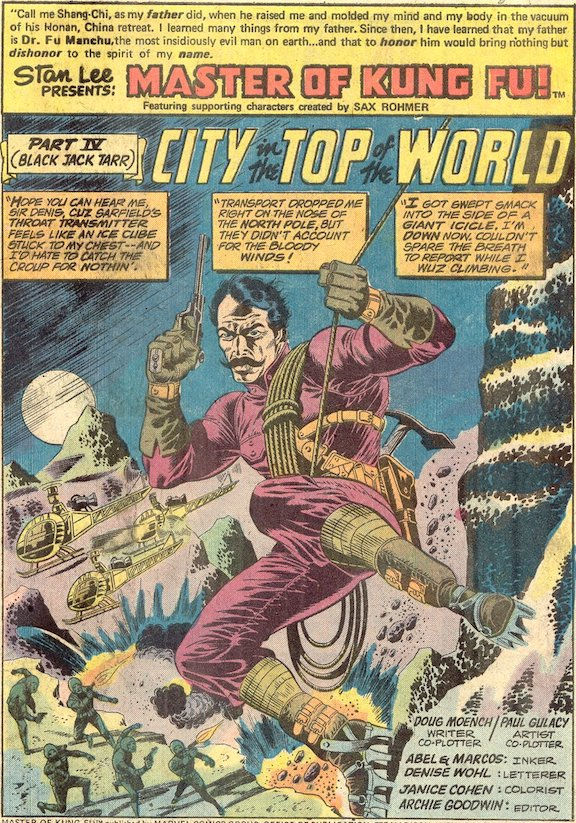
This run introduced Shang-Chi’s most constant and dependable companions for the entire series: on again/off again girlfriend and fight partner Leiko Wu, and a stray Siamese cat. If forced to choose a single Moench/Gulacy story to put in a time capsule as representative of this team's run on the series, then MOKF #38-39 would be it. Moench's excellent script and Gulacy's stylish art had it all: action, a love story or two, an homage to a classic movie actor, Shang searching for, having an epic fight with, and ultimately befriending an assassin called the Cat, ending with the symmetry of Shang rescuing/adopting a stray feline.
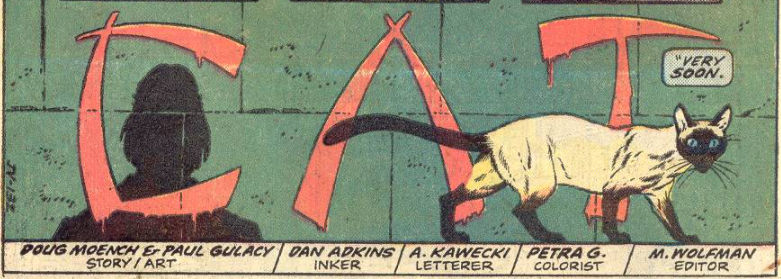
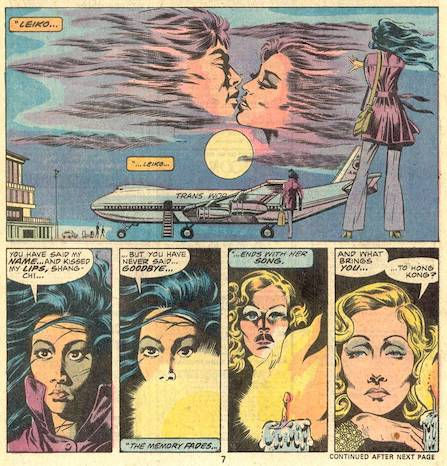
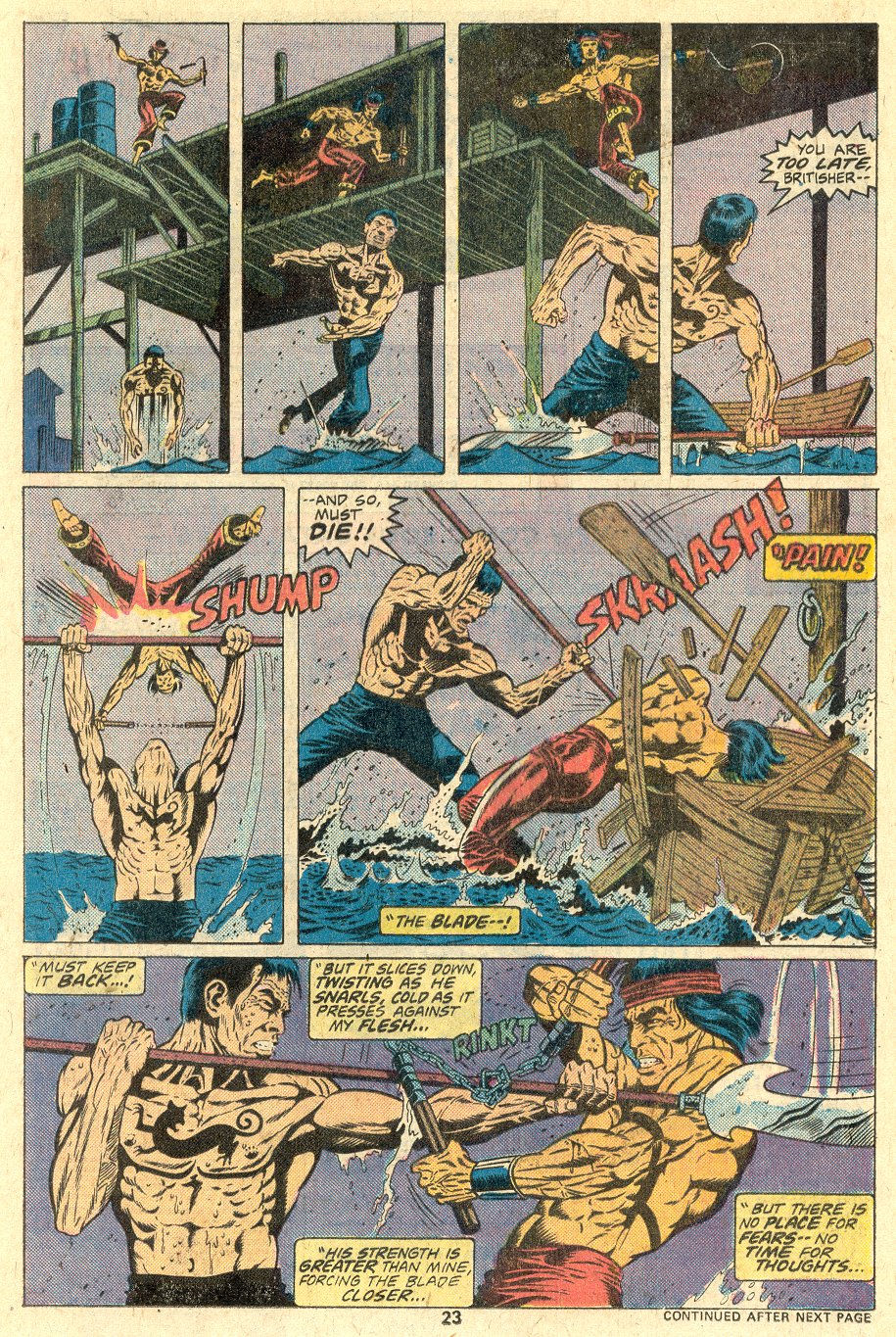
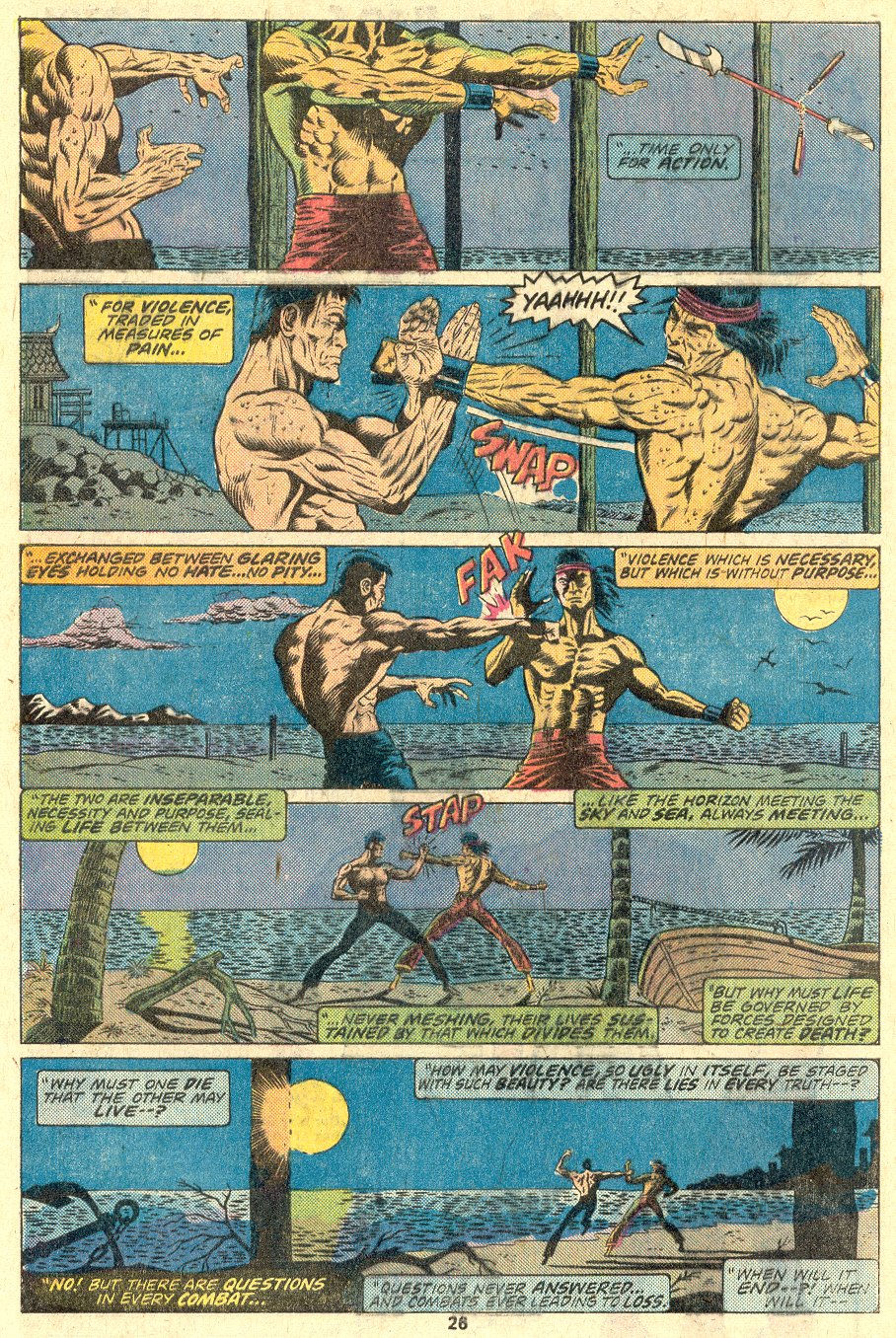
Paul Gulacy had a beautiful run that ended way too soon. Gulacy was already a master of innovative, dynamic page designs, and his knowledge/research of martial arts fighting techniques made for more authentic, believable fight scenes. Where Starlin’s Shang was somewhat bulky and muscular, Gulacy’s was slim, toned, and shirtless most of the time...the mirror image of Bruce Lee right down to his haircut and facial features. And why not? Lee was almost single-handedly responsible for the rapid rise in interest in kung fu and other martial arts. Gulacy even homaged photo references of Bruce Lee for an extra cool factor. Gulacy’s early art is sometimes mistaken for Jim Steranko’s, a high compliment. Even Steranko himself has said that if he had continued drawing comics, his stuff would look a lot like Gulacy’s. Like Steranko, Gulacy excelled at cinematic layouts and creative page designs, and every issue felt like the best Bond/Bruce Lee movie mash-up ever.
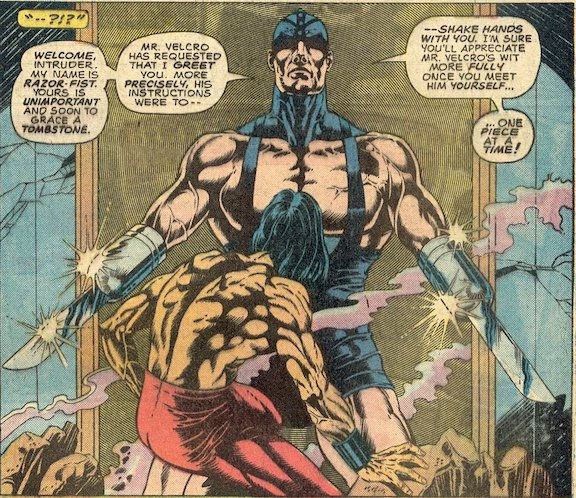
Frustrating to fans, Gulacy seemed unable to put together any more than a string of three issues at a time, except toward the end of his run. Gulacy definitely looked best when inking himself, but that was obviously not sustainable, so a variety of inkers were assigned, none seeming to stick around for long. Dan Adkins and Pablo Marcos seemed to be the best fits. Others were head-scratching choices that clashed with or obscured Gulacy's pencilled art.
The DOUG MOENCH-MIKE ZECK Era (MOKF #56, 59-60, 64, 66-101)
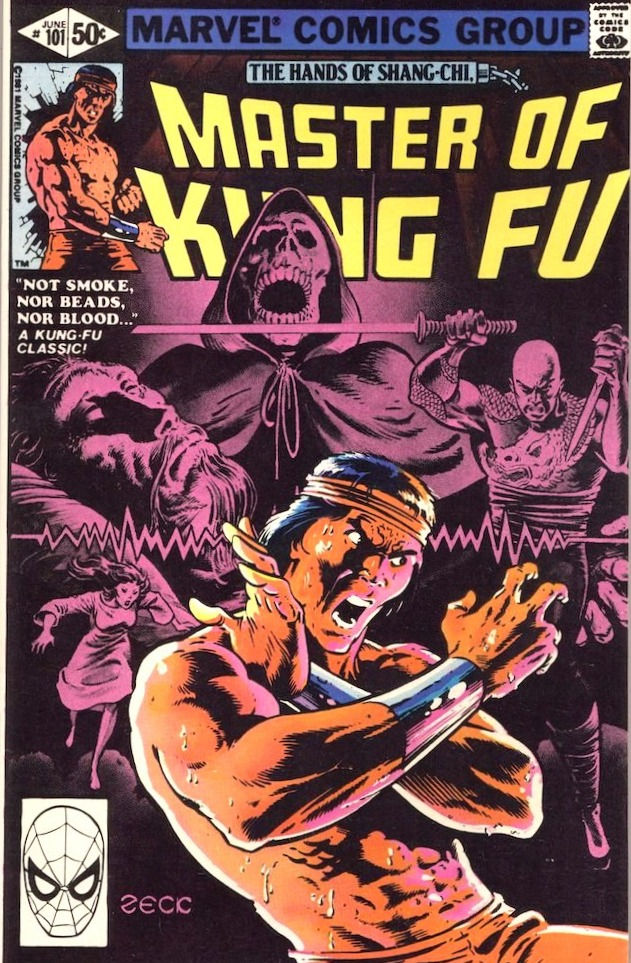
Not many B-list comics are fortunate to get even one superstar artist on board during their run, never mind THREE. The Mike Zeck era was notable for its artistic consistency alone, something the title had suffered from in the past. Readers knew what they were getting every month, and it was during this era that MOKF became the first comic I remember not being able to contain my anticipation for, while waiting for the next issue to hit the spinner rack.
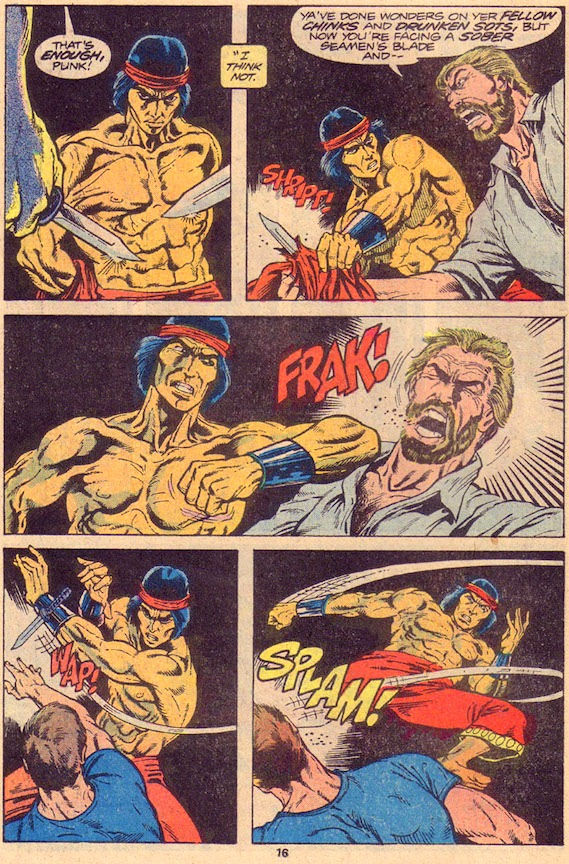
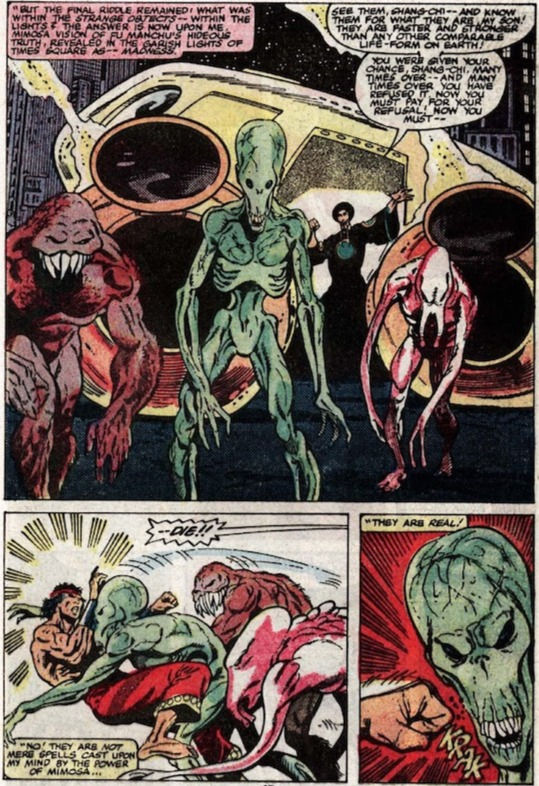
One of the sillier storylines had Fu Manchu construct flying saucer spaceships, and mutating men into alien-looking assassins.
One notable storyline late in the run had Shang leaving Smith's team for a prolonged stay in America, where he tackled domestic issues like gang wars...in Chinatown, of course.
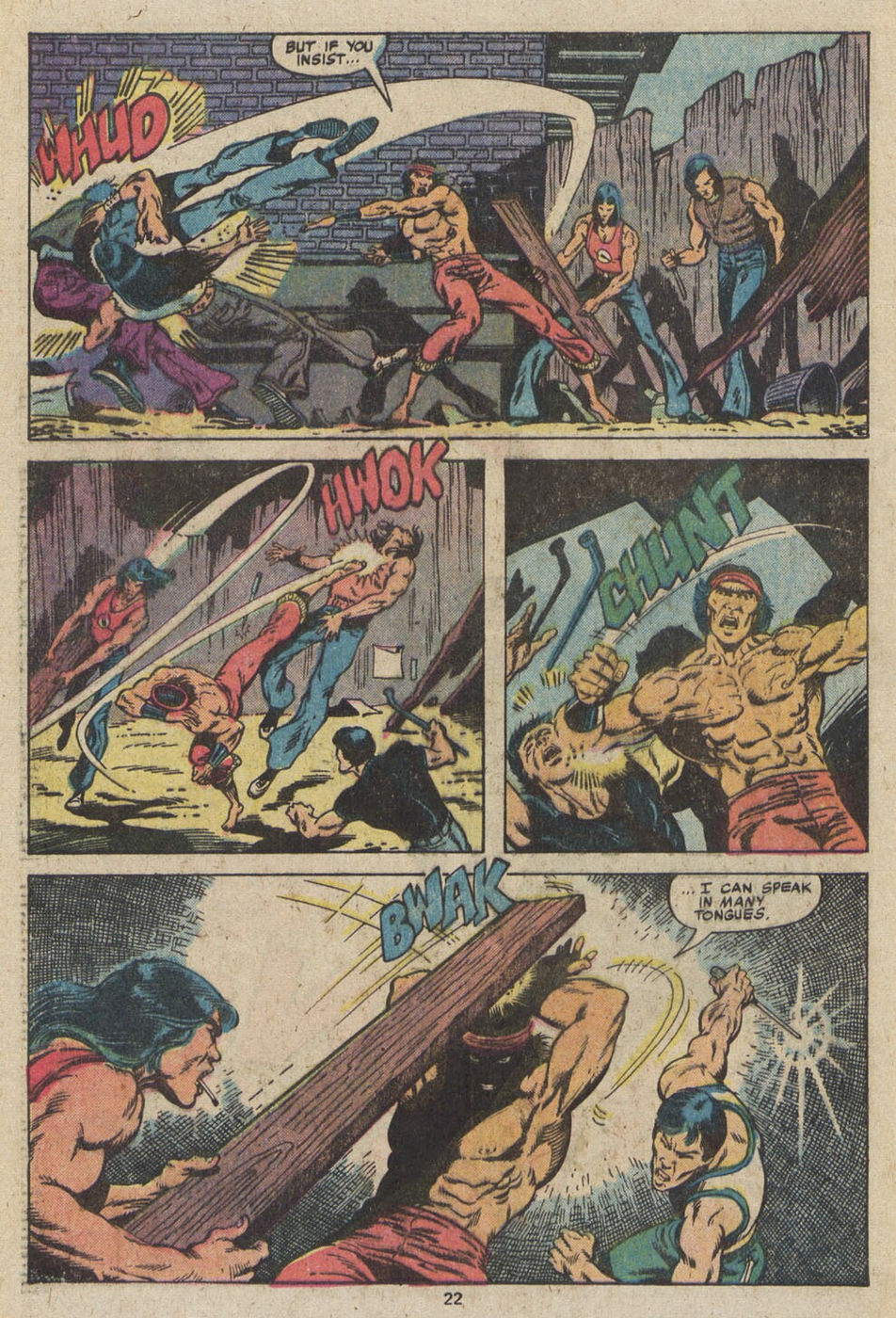
Zeck developed into a solid artist and had some of the most dynamic MOKF covers ever, and continued the in-your-face dynamism of Starlin’s and Gulacy’s interior pages. The next regular artist would move MOKF toward its most widescreen, cinematic style ever.
The DOUG MOENCH-GENE DAY Era (MOKF #102-125)
With issue #102, Gene Day graduated from Zeck’s longtime MOKF inker extraordinaire to MOKF penciller for an impressive art run of his own, with some very creative page designs and ultra-detailed double-page spreads. The highlight of the run was an epic issue #118 with many intricate full page splashes, double-page spreads, and a fight between Yin and Yang Shangs.
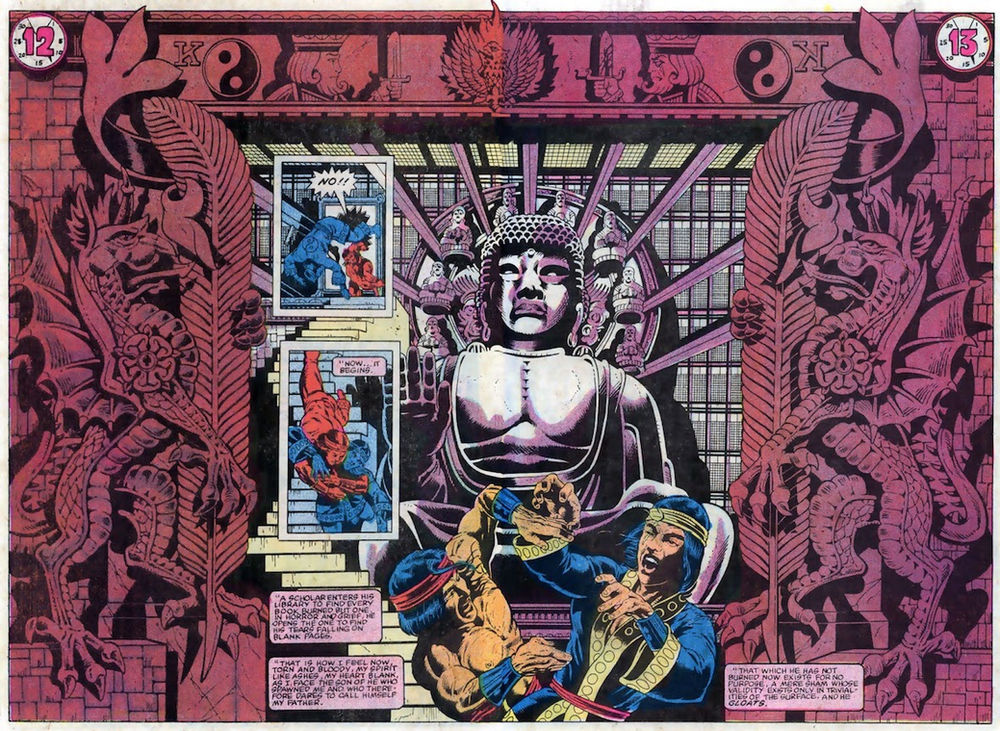
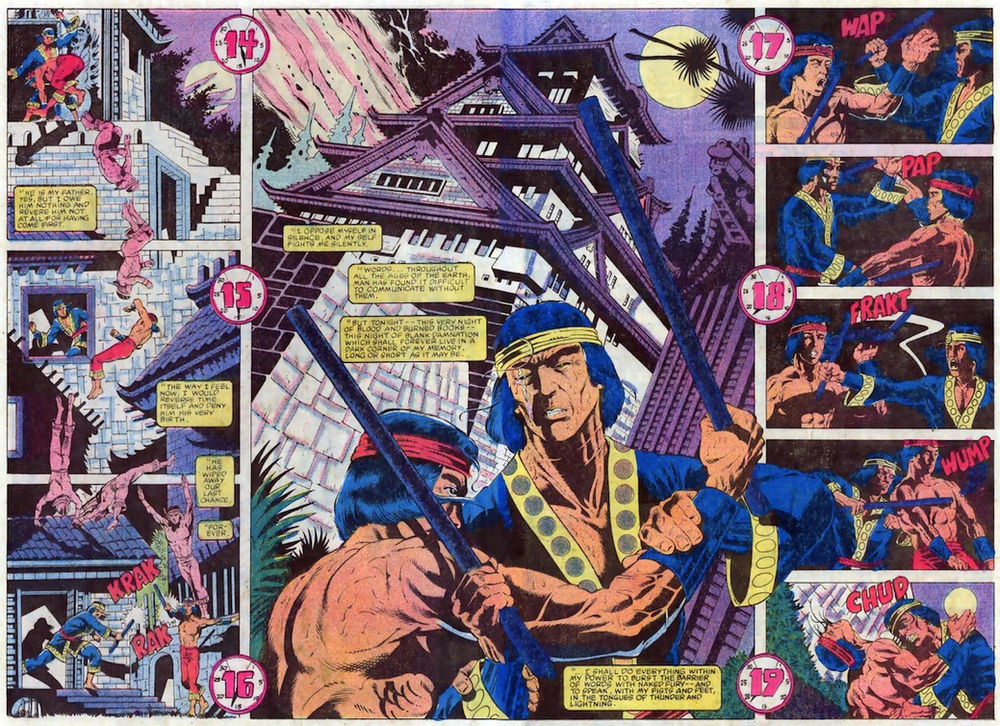
Issue #120 concluded the story of Shang's budding friendship with Carter, a very Jim Kelly-esque nod to one of Bruce Lee's famous martial arts movie co-stars. Despite the continued excellence in story and art, it became obvious to Marvel that martial arts fever had died out, and the title was cancelled with issue #125 in 1983, one decade after Shang’s debut.
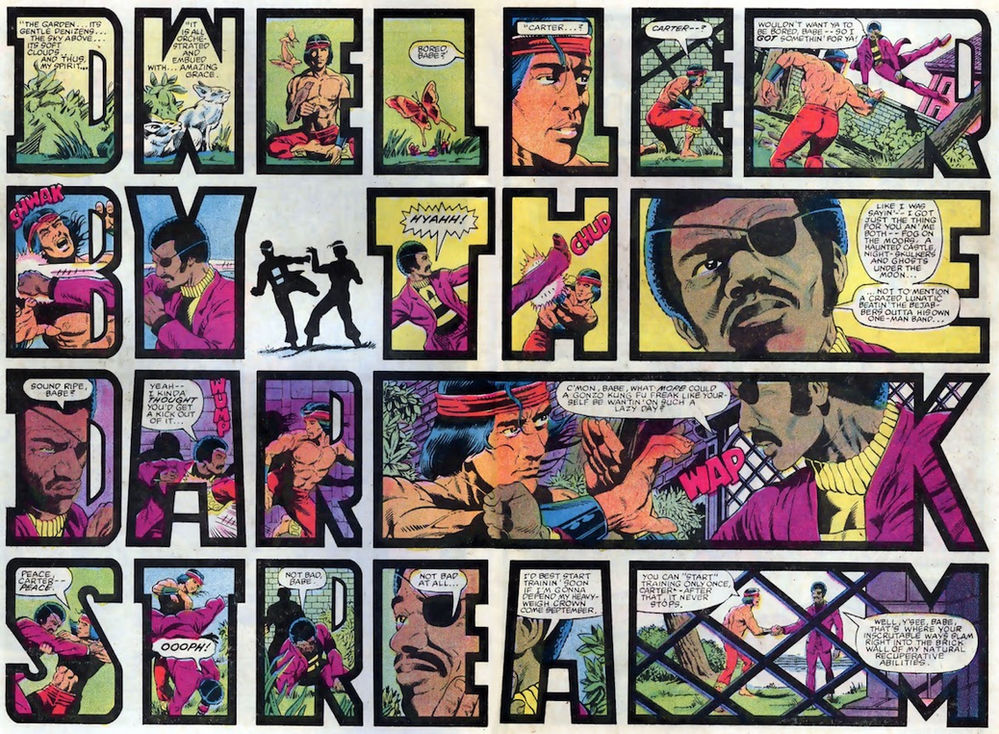
A WORD OF DEEP APPRECIATION FOR DOUG MOENCH. WhileI am a fan of comics more for the art, I can't help but be impressed by a writer with the dedication and imagination to craft stories on the same title for over 100 issues without repeating himself or phoning it in. There are very few writers who have accomplished such lengthy, quality, legendary feats. One running touch I appreciated was how Moench created characters that homaged real-life actors, challenging the artists to create likenesses of Marlon Brando, David Carradine, Marlene Dietrich, and others.
EPILOGUE. Other than an 80-page one-shot in 1990 by Moench and the Day Bros., Shang-Chi would not return to publication again until 2002, with a MOKF mini-series by Moench & Gulacy, when interest in martial arts had again risen in popularity, thanks in large part to Jackie Chan movies and a global phenomenon called Crouching Tiger, Hidden Dragon.